

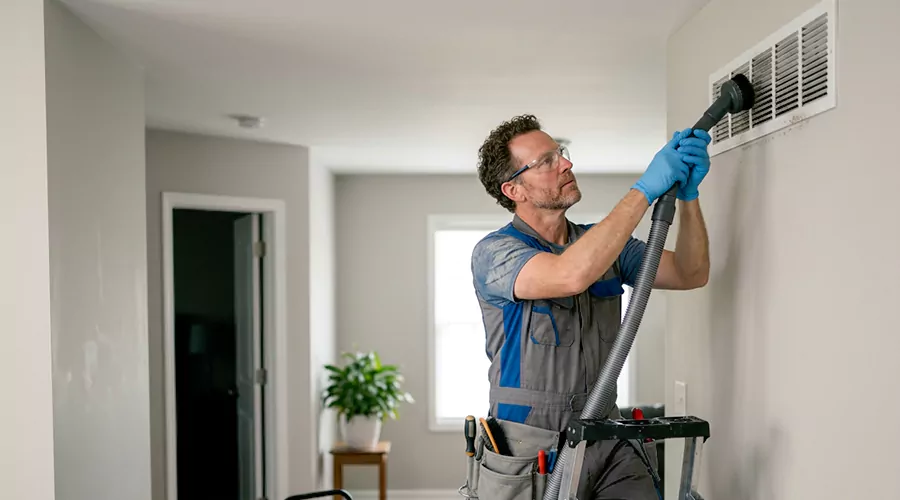
Dust coming out of AC vents usually means loose particles are being carried through a supply outlet when the blower runs. Common causes include debris near the register, air that bypasses a poorly seated filter or leaks that pull dirty air into return ductwork. Repeated visible discharge deserves attention.
A single small puff after a long shutdown is different from dust appearing every cooling cycle. Check when the dust appears and whether several vents behave the same way. The pattern can reveal where to look first.
Why Does Dust Blow Out When the AC Turns On?
Starting airflow can lift loose particles settled near a supply opening. If the material appears only once, a disturbed register may explain it. Repeated discharge means particles are entering or remaining in the airflow path. The source is not necessarily deep inside the duct.
Dust Trapped Behind the Grille
Construction debris or surface dust can settle directly behind a supply grille. When air starts moving, it can lift that material into the room. A flashlight inspection can show whether the debris is limited to the first few inches.
A Filter That Does Not Seal
A clean filter does little good when air flows around its sides. A wrong-size filter or loose access panel creates a bypass route. If the blower compartment is also dusty, the filter assembly deserves a closer look.
Return Ducts Drawing Air From Unconditioned Spaces
A return leak in an attic or crawlspace can pull in insulation particles and general dirt. Typical forced-air systems may lose about 20 to 30 percent of moving air through leaks and poor connections. That is an air-loss estimate, not a measurement of dust entering a particular home.
Recent Repairs and Renovations
Drywall work and floor refinishing release fine dust. If vents were left open, the material may remain near registers long after the work ends. Clean accessible surfaces before assuming every branch needs service.
Which Dust Patterns Point to Which Cause?
The timing and location of the discharge matter more than a single photo. One vent behaving differently suggests a local issue. Several outlets producing particles can indicate a shared upstream problem. These observations narrow the search but do not prove a specific failure.
| Pattern | Likely Starting Point | Safe Response |
|---|---|---|
| One puff after long inactivity | Dust near the outlet | Clean visible register surfaces |
| Dust from one room only | Local debris or branch defect | Compare nearby vents and photograph it |
| Dust from many vents | Filter bypass or upstream issue | Check filter fit and return path |
| Dust after renovation | Construction particles | Clean source areas and inspect openings |
| Damp residue or odor | Water intrusion or condensate | Stop moisture and seek assessment |
A visible cloud of fine particles is different from a dark stain on paint around a grille. Staining can result from airborne dust collecting on a cold surface. It does not prove that the vent is blowing the particles out.
What Warning Signs Should You Watch For?
Repeated discharge is the clearest symptom because you can observe it while the system operates. Record when it happens and where. Other signs can help explain whether the problem involves the register, filtration or the duct network.
- Dust particles float out at startup on multiple occasions.
- The same outlet produces debris after its grille is wiped clean.
- Several rooms show dust only during cooling cycles.
- The filter leaves visible gaps along its edge.
- A return grille has loose debris behind it.
- An accessible duct joint is separated or damaged.
- One room has weak airflow compared with similar rooms.
- A musty odor begins when the air conditioner starts.
- You see water staining by a ceiling outlet.
- Dust discharge started immediately after renovation work.
How Can You Test the Problem Without Opening Ducts?
You can compare visible dust before and after a cooling cycle without touching electrical equipment. The goal is to document where particles originate. This is not a laboratory air-quality test and cannot identify mold or fine particle concentrations.
- Turn the thermostat to off and let the fan stop.
- Wipe one affected grille and photograph the clean surface.
- Check the filter size and seating with the system off.
- Close the filter compartment and restore the grille securely.
- Run the AC for ten minutes while watching from a safe distance.
- Record whether dust appears immediately or continues through the cycle.
Do not tape household filter material over supply outlets. Blocking outlets can change system airflow. Avoid removing sealed panels or touching the blower. A short phone video is often more useful than a vague description of dust.
When Should You Call an HVAC Professional?
Arrange an inspection when discharge persists after accessible surfaces and filter fit are checked. Also seek help for damaged ducts, signs of pests or moisture. The technician should identify how material reaches the air stream before recommending cleaning or duct repairs.
An HVAC professional can evaluate blower cleanliness, filter rack gaps and return duct connections. When appropriate, duct leakage testing can identify hidden openings. If cleaning is justified by heavy debris, equipment should collect loosened particles rather than releasing them into the home.
Visible suspected mold needs verification rather than a visual guess. Do not fog chemicals into vents as a DIY solution. Routine chemical treatment of ducts has uncertain benefits and potential risks.
How Can You Stop Dust From Returning?
The most effective prevention addresses how particles enter the system. A properly seated filter protects the airflow path. Sealing duct leaks reduces opportunities for attic or crawlspace dust to join the return air. Routine surface cleaning helps with particles already in rooms.
- Inspect the filter each month during peak cooling season.
- Change a dirty filter according to the equipment and filter instructions.
- Vacuum accessible supply grilles when cleaning the room.
- Keep dust-producing work away from uncovered returns.
- Check accessible duct joints when arranging seasonal maintenance.
- Keep condensate drains and surrounding areas free of water problems.
Frequently Asked Questions
Conclusion
Dust blowing from AC vents is a symptom rather than a diagnosis. First identify whether it comes from one outlet or several. Check the filter fit and inspect the reachable grille area. Recurring discharge points toward a problem that deserves a closer look. If the source stays hidden, a technician can test the airflow path. This week, document the first ten minutes of one cooling cycle.